I am just back from giving an intense but enjoyable week of anatomy masterclasses to a talented group of artists at Sony’s Santa Monica studio. These are the guys and girls who have the enviable job of crafting the God of War franchise, a series of amazing games steeped in Greek mythology, a theme after my own heart.

Over four days I covered a ton of anatomy for the character artists, concepts artists, animators and riggers at the studio. But by late in the third day everyone was reaching saturation so we had a little fun trying to update my infamous Gallery Abominate with some of their work from God of War Ascension. The most interesting discovery from the week though: cervical ribs occur in approximately .2% of the population, and one artist on the course had this ‘neck rib’, making him officially a statistical outlier. Exciting stuff
.
The Eaton-Houdon Écorché is my update of the classical anatomy figure by 18th Century sculptor Jean-Antoine Houdon. His original l’Écorché sculpture, produced in 1767 during his time in Rome, has been used by artists studying anatomy for centuries. It is celebrated for its balance, gesture and proportions but, to the trained eye, has always contained a handful of anatomical inaccuracies. Combine this with an overall loss of detail resulting from centuries of re-casting and the piece was in need of both an accuracy update and a sharpening of details. The result is shown above.
The Eaton-Houdon ecorche figure is featured in the L’Ecorché eductional iOS app produced by collaborator Michael Defeo (available for download from the App Store here).
The sculpture will soon be available as an 18″ anatomy figure for desktop reference, hopefully continuing the centuries-old contribution this piece has made to artistic anatomy study. Subscribe to the newsletter to receive updates!
The Summer Anatomy for Artists course starts on July 5th. Since the online course started almost three years ago there have been a wide range of artists on the course including character artists from visual effects and video games, comic book artists, concept artists, oil painters, stone carvers, medical illustrators, medallion makers, figure sculptors, photographers, fashion designers and even a chainsaw sculptor.
No matter what your medium, if you are an artist looking to master the human figure this is the course for you.
The Summer session of Digital Figure Sculpture starts on July 5th. This course covers the critical foundation necessary to build naturalistic figures in ZBrush, including all the tools and techniques that I use day-to-day in my own figure sculpting – both on my art projects and on feature film characters.
Over ten weeks artists get a chance to hone their skills by completing numerous weekly figure studies and one detailed full-figure study. The course reinforces the importance of anatomy as the critical foundation for building realistic figures and shows practical construction techniques for applying this knowledge to figure sculpture. The goal is for every artist on the course to increase the realism and naturalism of their figurative work in ZBrush.
For more information and registration see the Digital Figure Sculpture course page here.
Anyone who has been to VENUS.io recently might have noticed that my Venus iPad Docking Station needs companionship. The good news is there are a couple new docking stations in the works, so she will have company soon.
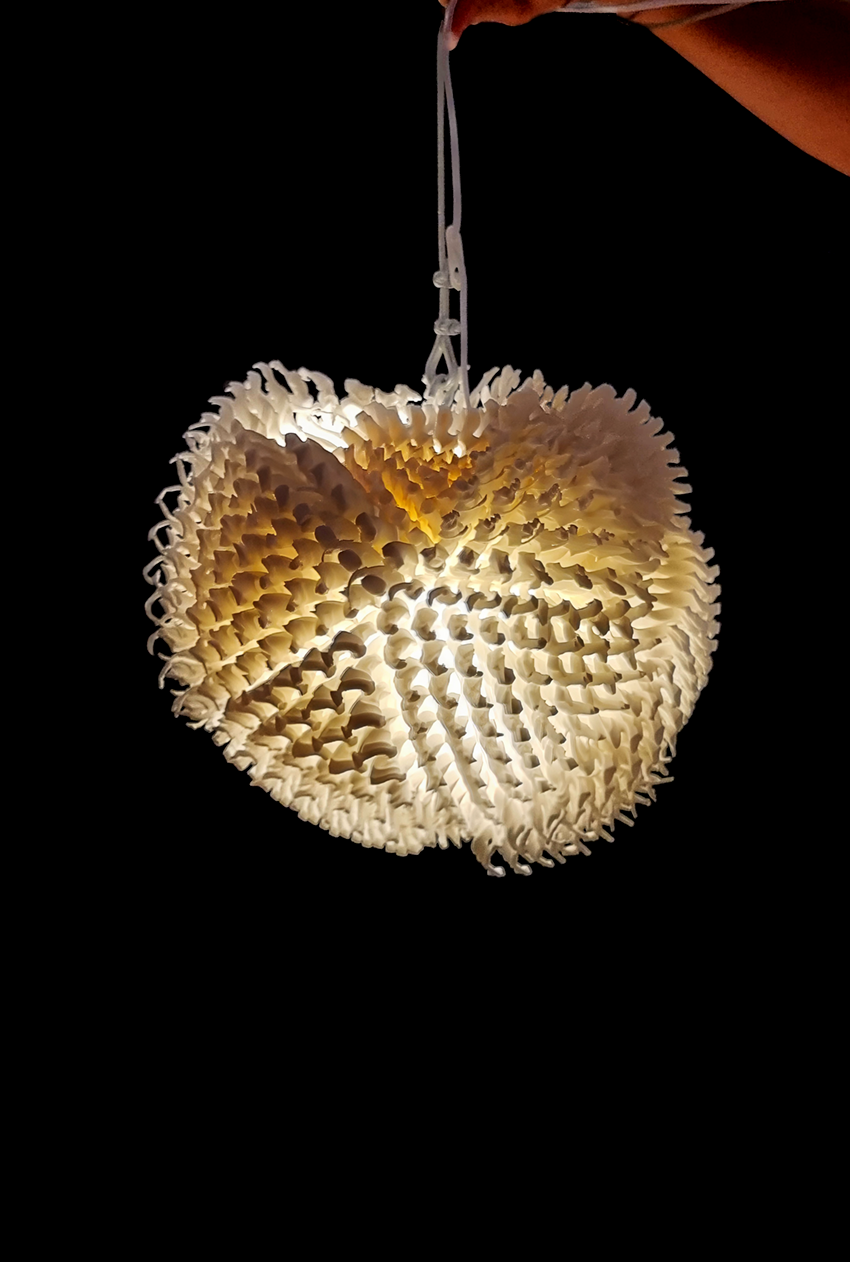
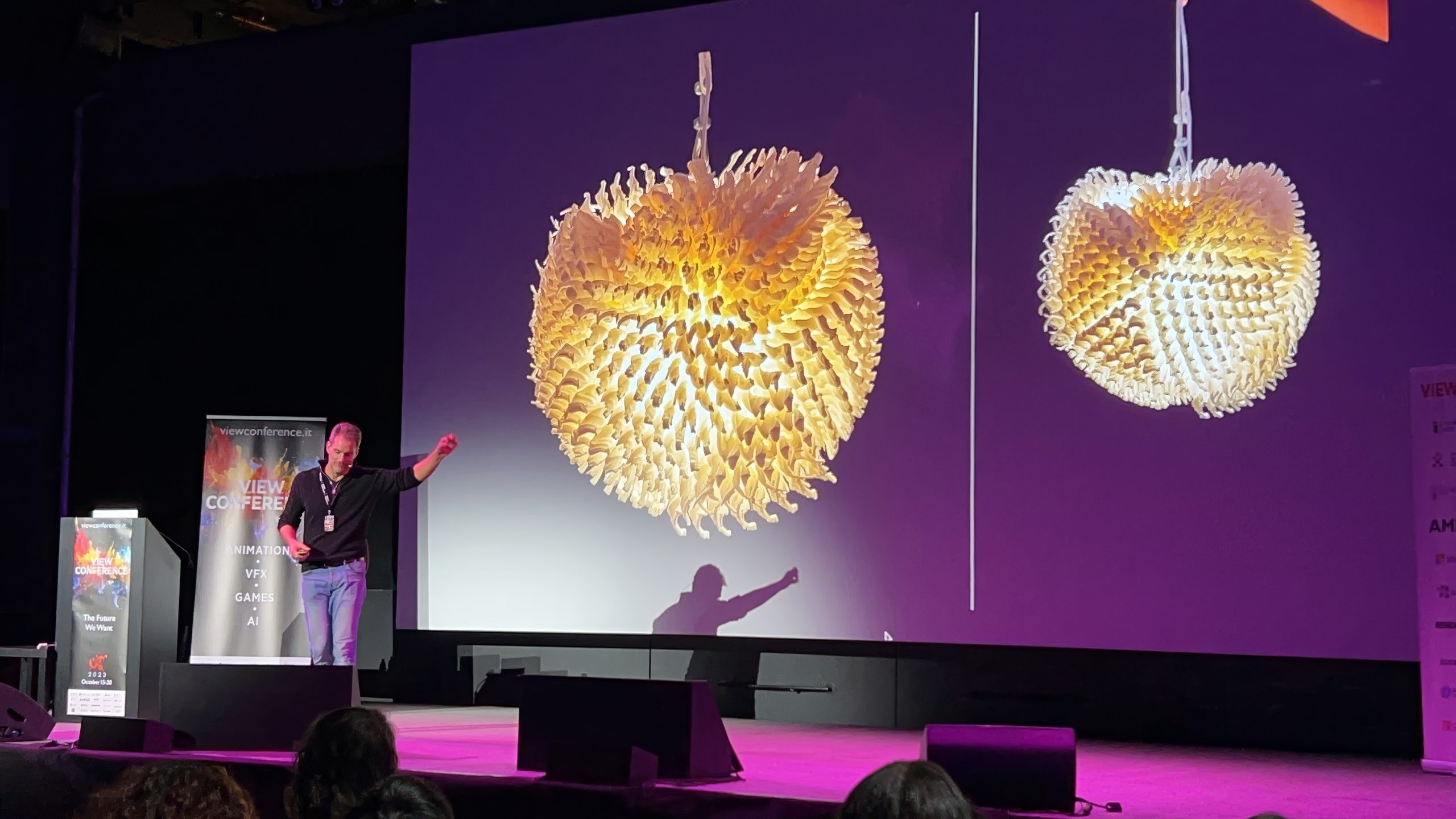
But now there is talk around the studio of making a sweet little (big?) desktop lamp to add to the Venus range. My sketchbooks have been bubbling with ridiculous and absurd variations on the theme. Here is one of the more presentable…
For updates join the Venus mailing list.
The White Horse is finally installed in London. This is the project of artist Mark Wallinger and was originally planned as a towering 50m tall horse (as tall as the Statue of Liberty) to be erected in the countryside of Kent and visible from the Eurostar. But around the big crash, arts budgets downsized and so did the scale of the horse. Now it is only a very average ‘life-sized’, but it is still striking in its crisp white finish and realism. About a year ago I worked with the team from Sample & Hold to refine the digital version of the horse, based on a scan of Mark’s actual horse. I spent time adding anatomical accuracy and life to the head, face, legs, and hooves (at the time my horse skills were primed, having just finished Spielberg’s War Horse).
After a bit of massaging the data was sent off for fabrication. Through a combination of 3d printing, CNC machining, and casting, the piece was brought to life – albeit at a scale smaller than originally intended. But if you are in London and want to check it out, it will be on display on the Mall (just off Trafalgar Square) for two years.

If you haven’t yet seen the Galaxy chocolate ad with the reincarnated Audrey Hepburn it is worth checking out here. The piece is bound to stir up controversy – bringing a beloved actress back from the dead to flog chocolate bars may not be everyone’s idea of good taste. However, the technical achievement is clearly impressive and full credit should be given to the visual effects team at Framestore for pulling it off with very tight deadlines!
I was involved in the very early stages of the project, helping spec out the requirements (which amounted to a host of very intimidating computer graphics challenges) and then sculpting the original likeness of Audrey. I passed this digital maquette of Audrey to the capable team at Framestore and then, because of scheduling commitments, had to wash my hands of the project. I waited with keen interest to see how they would handle the really hard challenges – facial rigging, shading, and animation. Knowing how difficult the tasks were in front of them, my expectations were tempered with a healthy dose of reality. But having just seen the piece, I am impressed. Does it successfully cross the uncanny valley? Pretty close, but I am sure there will be much debate on this. Regardless, I am sure it will be remembered, for good or bad, as one of the pioneering celebrity “reanimations” (along with Tupac and a few others) that kicked off the new trend in posthumous advertising leads.


The Venus of Cupertino, my iPad docking station, is just back from a busy week at the London Design Festival. She received countless oogles, smiles, and appreciation over the four days. She was even chosen as the top design at the festival by a prominent online design & lifestyle magazine.
Now that the Venus of Cupertino is almost all grown up, most future posts and updates on the Venus project will be found at: VENUS.io There you can follow all the gossip, blogs, & tweets. And of course you can order her there as well!
I have recently returned from a great week of lecture and workshop at Ubisoft Montreal (legendary for their work on the Assassin’s Creed, Far Cry, and Prince of Persia series). The topic for the week was Portraiture and Facial Anatomy and we covered a huge amount of secret knowledge for constructing faces. If you are interested in going in-depth on ALL the important aspects of portraiture and facial anatomy for artists, then check out the workshop I run in London, OR stay tuned for the online course coming this Spring! Sign-up to the the newsletter to stay informed.
The Venus of Cupertino, Scott’s iPad docking station is finished. Here she is with all the creative mess generated taking her from the early prototype to the final functional docking station: a short stack of sketchbooks, a pile of 3d-printed grip and charger tests, wads of spent sandpaper, a few files, and of course a couple iPads.
London Design Festival 2012
The Venus of Cupertino will be at London Design Festival in September. She will be in attendance as the iPad docking station you see here but there may be a couple other surprises as well. If you are near London on September 20-23, stop by Tent London and see her in person.
ORDER
The Venus of Cupertino is now available to order at:
VENUS.io
An army, ok more like a platoon, of Venuses getting ready for London Design Festival 2012. Find them at Tent London on 20-23 September.
I recently contributed a four page masterclass to 3dArtist magazine. In it I outline the process of using écorché drawings to study anatomy. The articles gives a concise introduction to the material that I cover in-depth in my Anatomy for Artists course. If you are new to anatomy or are interested upgrading your anatomy skills, check it out.
straight from the mold and put to work
The first artist’s proofs of the Venus of Cupertino are now coming out of the mold. Each piece is hand-cast and gently coxed from a finely detailed platinum-cured silicone mold. Ok, occasionally the gentle coxing gives way to yanking, jerking and pulling, but not every labor is easy! Check out these images of the Birth of Venus.
Scott’s iPad Docking station, the Venus of Cupertino, is one of the ‘cultural picks of the month’ in the July issue of Wired UK.
The Venus of Cupertino will make her public debut at the London Design Festival on September 20-23. You can find her at Tent London, in the Old Truman Brewery. Stop by and say hi!

The Venus of Cupertino has been spotted in a cafe in London.

Find out more about Scott’s iPad docking station, the Venus of Cupertino.

I’ve just finished a fantastic, four-day intensive anatomy course for the artists at Valve in Seattle, WA. For those not in the know, Valve is the collective talent behind the Half-Life and Portal series as well as many other landmark games. A truly unique company with amazing artists.
-> VALVE
Here is a work-in-progress image from a collaboration with two old colleagues from my days at the MIT Media Lab. They are conceptual designers working on a project to visualize the effects of zero-gravity on human form. The exhibition will have many aspects but my contribution will be two life-sized 3d-printed heads showing the difference in form between a man raised on earth versus a man raised in space. The image above shows the man raised on earth. The next step is to reverse the effects of gravity and UV exposure, and then get these off to the 3d printer. More images coming soon…

OK, it may not be a great movie but there are some decent visual effects in there. The CGChannel website has an article talking about the visual effects behind Wrath of the Titans. I designed and sculpted the three Cyclops in the film and then nurtured them, like giant one-eyed children, through much of the post-production process. My design process is always firmly grounded in the plausibility of the anatomy I am creating and the cycloptic eyes proved an interesting challenge (with mixed success). Below are a couple images of the concept sculptures I create while working up the body types and personalities of the three Cyclops – the aged father and the two brothers.
© Copyright 2012 Warner Bros. Entertainment Inc.
I have been busy over the past months revising and updating Jean-Antoine Houdon’s classic L’Ecorché sculpture for the soon to be released iOS App of the same name. The app is a collaboration between myself and legendary character sculptor Michael Defeo. I will post more on the app, including some behind-the-scenes ‘making of’ videos, soon.
Until then, please check out the app’s Kickstarter project for more information.
The next session of the Digital Figure Sculpture Course is getting ready to start on so I thought I would post this image from the culminating exercise and also talk a little bit more about the philosophy and goals of the course.
Simply, the goal of the course is to teach students how to create more naturalistic figure sculptures. Too often artists struggle to breathe life into their figures and are left scratching their heads as to what went wrong. There are many stages where things can go off track but most often it is inexperience with anatomy, planes, volumes, and proportions. Everyone wants to jump straight in and put muscles onto their sculptures but in their zealousness they forget the critical construction and proportions that hold things together. The course guides artists through the entire process.
Continue reading »
The final week of the course covers the tools and techniques used to refine the figure in ZBrush. This lesson concentrates on refining small forms and plane transitions, but emphasizes correct placement and scale relative to larger forms and proportions. Finally, all good sculptures need to be photographed (rendered) and presented well to look their best so there is a culminating lecture on lighting and rendering outside of ZBrush. In this video Scott talks about the fundamentals of lighting and shows his rendering techniques in Maya and also gives a short preview of Luxion’s Keyshot renderer.
This week artists continue their full figure sculptures by sculpting the hands and hair. The techniques for refining the hands are largely a review of the workflows used in Week4′s exercise, but sculpting the hair in ZBrush is an entirely new topic. Sculpting hair is a very difficult thing because it requires a level of artistic abstraction to translate the flowing fibrous forms of hair into a tangible sculptural surface. Because the process is so intangible every artist eventually develops their own style for sculpting hair. This week’s lessons show Scott’s approach to sculpting hair in ZBrush. They cover his tools and techniques for general hair sculpting, how ZSpheres/ZSketch can be used for hair, and also how the new DynaMesh features can be used to create interesting, complex styles. (and yes, the model does have a crazy double ponytail!)
My iPad docking station, the Venus of Cupertino, is hot off the press. If you missed the genesis of this project see the early sketches in the drawings section.
The Venus of Cupertino is a sculptural docking station inspired by the rounded forms of the ancient Venus figurines – a fertility goddess for the technology age.
With gentle hands, she will cradle your 2nd, 3rd, or newer iPad while syncing or charging. All cables are neatly routed through the base of the figure and are fully changeable to support future iPads. Each Venus is hand cast in museum-quality resin and available in a selection of finishes.
ORDER
SHIPPING: worldwide
PRICE: $199 USD
ORDER now: VENUS.io

I am just back from a fantastic week of anatomy workshops with the character team at Rocksteady Studios, the creators of the wildly successful Batman: Arkham Asylum, and Batman: Arkham City games. Over five days we covered a lot of territory, going deep into human anatomy and portraiture, including some inside secrets on facial anatomy. While I was there, the Joker took home the “Character of the Year” award at the VGAs! Congratulations to the team at Rocksteady. I think there are a lot of people looking forward to what you do next (no pressure)!